


Let's Process That

“Let’s Process That”
written by Ashlyn Mayhall-Hays, LPC
The term “process” is so common that one client described it as “something I know but can’t define” and I really related to that. Back in the day, I was a participant in a therapeutic children's camp that specifically had a group dedicated to processing. My job was to keep my camper regulated and connected while the head counselor led the “processing.” and I remember being confused over how this group differed from anything else we were doing. Almost a decade later, the definition I gave one of my other clients was: To
process is to experience the moment, as it is, and then move it along, with you developing new insights.
In most circumstances, processing minor situations happens immediately:
Omg, Betty Sue gave me a look and it made me so angry, I was so confused, but ugh...it’s fine; I’m just going to stay away from her and try to focus on my work.
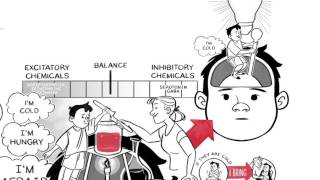
However, what if things don’t get processed? Moments of high distress, fear, and trauma, often become stuck. Your nervous system isn’t sure whether the situation is truly over and thus it acts as if it is still happening. Again and again, the same situation runs on the conveyor belt and now it’s not just she gave me a look and I was angry, it’s she gave me a look and I was in danger. Unprocessed situations and memories lead to distress, negative core beliefs, disproportionate responses, and a chronic cycle of dysregulation. Being aware and processing minor moments, also brings awareness to those areas that need more time or have been stuck for longer than you are aware.
Simple, right? Well simple doesn’t necessarily mean easy.
A quick note on what processing is not.
1. Processing is not "Let me just unconsciously shove this in a box and push it away because I just need to deal with it and move on." The very event you were trying to process away just becomes stuck and runs back through the conveyor belt again and again. Suddenly, a minor inconvenience gives you the same response as a major event because that particular box made its round again. Like Lucy and Ethel in the Chocolate Factory, it becomes overwhelming to try and process so many items at the same time.
2. Processing is not rumination. Staying in the same thought loop around a situation may sometimes feel like you are processing it by examining it at every angle; however, we often hold on to the thoughts/feelings/beliefs around something without growing through it.
3. Processing is not dumping. In a similar vein, verbal processing and venting are different. Processing leads to change, not just the relief of someone hearing your side.
Okay, great, we know what it isn’t. You’ll be pleased to know that there is a process to processing. The following section will walk you through these steps with some experiential sections marked in italics. Please be sure to stay aware of your emotional state and don’t put yourself in a position of too much distress for the sake of this little post. If that is a risk, please contact your mental health provider.
1. Experience
To experience the moment is counterculture, considering the fast-paced and dopamine driven environment we live in. This client was so disconnected from the moment that they could hardly identify physical sensations that paired with emotional ones. To truly process a moment is to look at it in its entirety–thoughts, emotions, and sensations–and let those reactions run their course (within reason). Different modalities of therapy do this in different ways. DBT sits within mindfulness skills. IFS pairs part reactions with body sensations. Somatic experiencing follows through the sensations with movement. EMDR through Phase 2-3 and 6.
TRY THIS: Consider a situation you may still be holding on to (something of low distress for the sake of this exercise). Notice how your body shifts and reacts to this event. Are there any thoughts or images coming up around this event? Notice what you’re experiencing without rushing or judging it or yourself.
2. Acknowledge
…or naming the experience starts to activate your self-empathy. Children are taught to connect emotional situations with the correct emotional word. The more we do this, the more we build the Theory of Mind and connect our experiences with others. This is also something that is necessary for self-empathy. Without acknowledging and using emotional language around situations, there is a handicap on the ability to meet that situation with empathy or compassion. Do not get simplicity twisted, this is a skill that often needs to be developed and honed. DBT uses emotion lists, IFS uses parts mapping, somatic experiencing often has a sensation menu. EMDR would focus on this in Phase 2.
TRY THIS: How would you describe what you’re experiencing? Any emotional words fit this situation? If you are stuck on your basic Inside Out emotions (Joy, Sad, Disgust, Fear, Anger), take a look at this emotion wheel and see if there is another word that fits the intensity of this situation. There is no judgment or right/wrong here, you are just labeling your own experience of this situation.
3. Accept
Acceptance is difficult on the best days but is necessary not only for moving beyond stressful situations but also to invite necessary changes and growth. Acceptance does not mean that it was fair that it happened but is an understanding of the impact it had on you and that all you can do is begin to move forward. DBT operates under the assumption that acceptance and change can coexist. IFS meets all parts as they are without judgements. EMDR may find this through Phase 4 and 5.
TRY THIS: Allow yourself to sit with this experience, remaining aware of the sensation/images/thoughts coming up. Gently begin to remind yourself that the situation cannot be changed. but you can move forward.
4. Get curious
Curiosity and exploration is the true name of the game. Through this exploration part, we are encouraging the situation to come up to the present by inviting agency and new conceptualizations. This is where, again, it’s not rumination and constant analysis, it’s determining what you do next. This is the basis of all therapy generally.
TRY THIS: What do you want to do with this experience? Staying in the moment with your physical sensations, allow yourself to explore how you would soothe those sensations. Considering the situation itself, is there anything more for you to learn or take away from it?
5. Take Action
While there is nothing you can do to change the past, time moves forward through movement and action. Based on the experience and explorations of a situation, you are able to identify new choices that prevent a recurrence of this situation and prepare you for those things that you can’t control. With this knowledge, action or changed behaviors can be applied. DBT uses chain analysis for new ideas. IFS contracts other parts utilizing Self energy. EMDR would explore this through future templates.
TRY THIS: What steps can you take with this situation? Go ahead and follow through with those self-soothing ideas, letting the sensations ride out. Or consider a boundary you can set to prevent this situation from coming back. Maybe you noticed another similar situation to process, consider bringing this to your next therapy session.
6. Shift
I mentioned time moving forward. In closing the processing session, the invitation to notice and experience (a full circle moment) the changes that occurred through processing strengthens your ability to notice and withstand further emotional shifts. Additionally, this shifting stage can be an intentional “putting away” of the situation, exacting control over any lingering bits.
TRY THIS: Run an inventory of what shifts you’ve noticed along the way. Even micro-changes are important. Allow yourself to imagine placing this situation in a box. You can carefully place this box in a safe storage area. It’s there for you to review as needed, but you are in control of opening the box. Again, notice what occurs along the way. Shift your focus just to your breath, noticing the cycle of inhaling-and-exhaling. Whenever you’re ready, relax and shift your attention to whatever, knowing that you can come back and check on the box whenever you need to.
Using our example from the beginning, you can see these steps: Omg, Betty Sue gave me a look and it made me so angry, I was so confused (Experience, Acknowledge), but ugh it’s fine (Accept). I’m just going to stay away from her and try to focus on my work (Explore, Action). The shift is in just moving on and following through on the action.
The next time your counselor suggests “Let’s process that," they are likely noticing either an extreme or muted response that doesn’t match the situation, a rumination or presence of a negative core belief, or have noticed a physical shift in you (tense muscles, sweating, or paling of your skin). We are trained to pick up on memories that are still circulating the conveyor belt without ever getting properly organized. Also, pro tip, if you ever come in with “I don’t know what to talk about," trust that there is something that needs to be processed!


Comments